
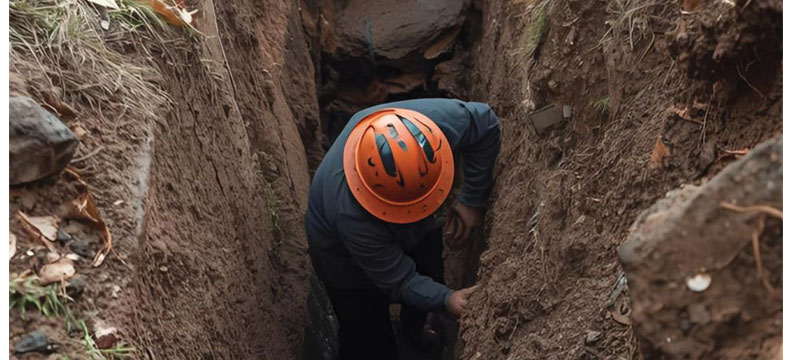
Every excavation presents unique hazards, but one risk remains constant—cave-ins can happen without warning. According to OSHA, trench collapses can occur in seconds and can result in serious injury or death. That’s why proper planning, protective systems, and daily inspections are critical before anyone enters a trench.
Whether you’re working on a utility installation, pipeline project, or municipal repair, remember these five essential trench safety practices:
-
Provide a safe means of entry and exit. Ladders, ramps, or other safe access must be available for workers entering or leaving a trench.
-
Protect against cave-ins. Every trench that requires protection must use an appropriate protective system, such as sloping, shoring, or shielding (trench boxes), based on OSHA requirements and site conditions.
-
Keep spoil piles and equipment back from the edge. Excavated soil, materials, and heavy equipment should be kept away from the trench edge to reduce the risk of collapse and falling hazards.
-
Watch for water and changing conditions. Standing water, rain, vibrations, and other environmental factors can quickly make a trench unsafe. Continuously monitor the work area for changing hazards.
-
Never enter an uninspected trench. A competent person should inspect the excavation before each shift and after any event that could increase hazards, such as rainfall or ground movement.
At Texas811, we know that safe digging begins long before the first shovel breaks ground. Calling 811 protects underground utilities—but protecting the people in the trench requires following established safety practices every day.
For complete trenching and excavation requirements, refer to OSHA’s Excavation Standards (29 CFR 1926 Subpart P) and always ensure a competent person is overseeing excavation activities. Safe trenches save lives.