
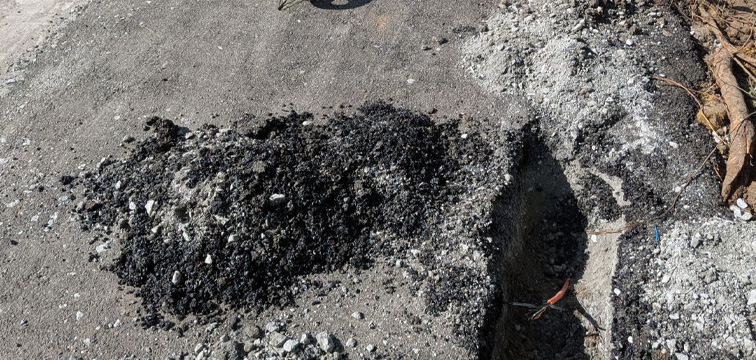
There are times when underground utilities get damaged even when a locate request was entered. Sometimes the locate request may not yet be valid, or all facilities may not have been marked. There are also times when paint markings are worn away by traffic or washed away by rain, or when flags are removed. Underground lines may also be mismarked. There are many excellent damage prevention professionals, but these situations can still occur. There are many factors involved in protecting underground utilities.
Back in June, a fiber-optic line was damaged in South Nashville. The damage investigator reached out to me for clarification on the dig law. You see, the excavator had entered a post-dated locate request, utilizing the maximum window of 10 working days. For those of you who don’t know, you can enter a post-dated ticket up to 10 working days in the future. This option was implemented in August 2022 to help locators manage the volume of tickets due within three working days.
Once I started digging into how this fiber optic line was damaged, I quickly realized it was something the excavator did NOT do. They failed to check the ticket’s status through Positive Response. The locator visited the job site and marked the facilities with spray paint within five days after the locate request was entered. Because the site was in a high-traffic area and had recently received rain, the markings had washed away or worn off. When the excavator started their work, they cut the fiber line.
In this incident, had the excavator checked Positive Response, they would have seen that the locator had entered a “Located – Facilities Marked” response. That response would have alerted the excavator that something was wrong because no markings for the fiber-optic line were visible. The excavator could then have submitted a Second Notice request to have the facilities remarked. Unfortunately, that did not happen.
Here are some useful steps when it comes to protecting underground facilities:
Pre-Marking the Job Site
Before entering a locate request, visit the property and identify the area that needs to be located. Whether the property is small or large, use white paint or flags to identify the area that needs to be marked. This will speed up the process for both the locators and you. You can purchase white spray paint at hardware stores or major retailers such as Home Depot, Lowe’s, or Walmart. Spending a few dollars and a few minutes on the front end may save you some time and money on the back end. Never assume the locator knows where you are working. Just because you say, “Mark the entire property”, that could be a vague description. Take the guesswork out of it and put white markings down.
Positive Response
After entering the locate request, use your ticket number to check Positive Response through our portal at www.tenn811.com and review each utility operator’s response. If you choose to receive ticket updates by email, the Positive Response information will also be included.
Utilities are allowed up to three working days to locate their facilities, but if all listed utilities have responded with “Clear – No Conflict” or “Located – Facilities Marked” before that time, the ticket automatically becomes valid. You will be sent an email notice that your ticket is valid, and you can begin your work. Again, it must be one of those two responses from the utility members Tennessee 811 contacted.
If you check Positive Response and there is no response from a utility by the valid date and time, enter a Second Notice request to Tennessee 811. I’m often asked, “Do I have to wait three more working days after submitting a Second Notice?” The answer is no. It is a good practice to give the utility operator that has not responded a chance to mark or respond via Positive Response. The end goal should always be safety and damage prevention.
Respect the Markings and Dig with Care
When you arrive at the job site, identify all utility markings and dig with care. If the excavation will occur near utility markings, hand dig or pothole as required. Even highly skilled equipment operators can work more precisely with hand tools than with a backhoe, trencher, or other mechanized equipment. Our dig law establishes a Safety/Tolerance Zone consisting of the width of the facility plus two feet on each side. As I mentioned before, some utility operators may want to be on site if you need to work in close proximity to their underground facilities.
Remember to stay safe. Call 811 or enter a locate request online, respect the markings, and dig with care. Is there a damage prevention topic you would like us to cover? Please contact me at
jfryer@tennessee811.com.