
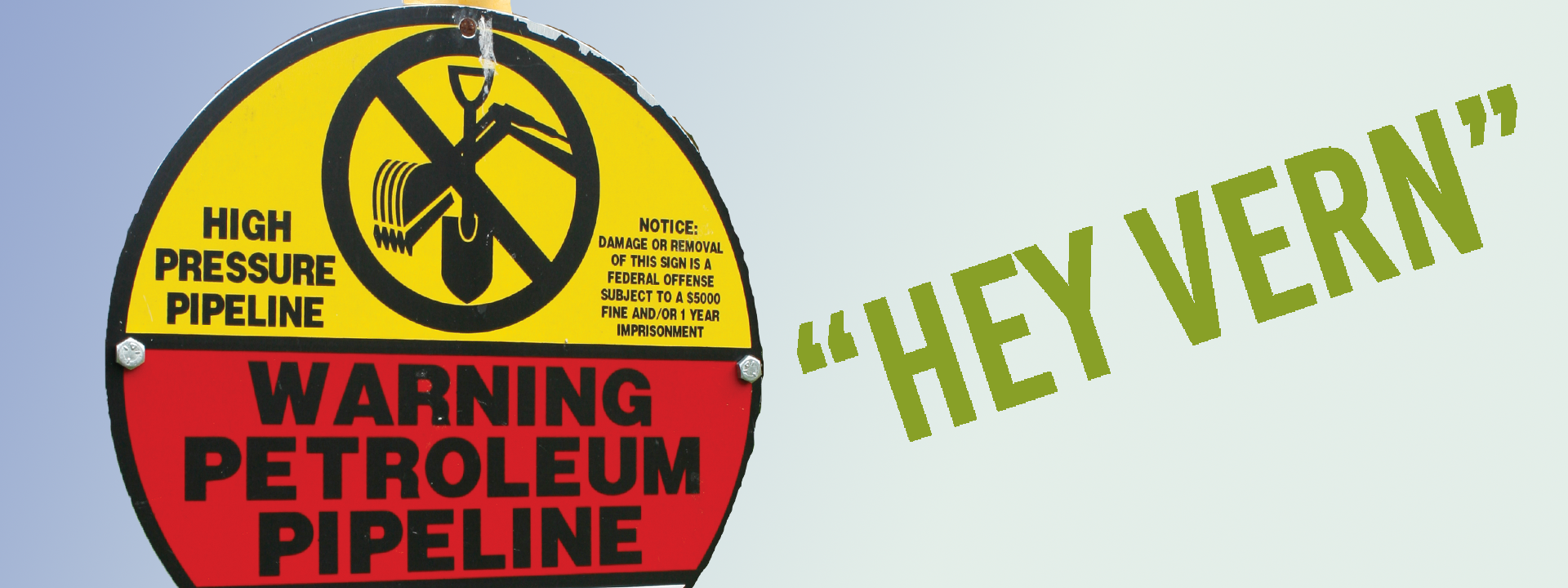
Remember Jim Varney, in the persona of that wacky character who was always calling out “Hey Vern” to his neighbor to remind him to call 811? Early on, from the late 70’s to early 90’s, “Hey Vern” and pipeline markers were our major sources of public awareness. I believe Vern would be impressed to see how far we have come in 2026 regarding reaching out to our stakeholders, but he would still recognize we have a long way to go. With the national geography of fiber deployment and the increased demands of other utilities, we have peaked in our effectiveness with most public awareness and damage prevention activities. Our greatest demands are stemming from all of the underground fiber installation spurred by federal grants to increase internet speeds to less populated areas and more competition among a growing number of service providers. Locators are stretched thin. A used, twenty year old directional drilling rig would go for $7K a few years ago and now it’s $60 to $70K on social media sales sites. It seems as if there is a boring rig on every corner in some cities. With an increase in boring activity also comes an increase for boring laborers. While most subcontractors are diligent in training boring staff, the minority are still putting diggers out without proper training and supervision. This is not only where the strain on utility locate/construction/repair workers comes from, but it also puts our damage prevention efforts into a new “overdrive” gear.
I mentioned “stakeholders”, a term popularized by the American Petroleum Institute’s RP (“Recommended Practice”) 1162. RP1162 is the industry standard for public awareness programs that support pipeline safety and damage prevention. Stakeholders are the key audiences that we target our public awareness messaging to. When RP1162 was first published in the last quarter of 2003, it answered the needs of PHMSA’s Pipeline Safety Improvement Act of 2002 and was incorporated in pipeline safety laws as the guide for damage prevention. While there have been two follow-up editions of RP1162, codes still recognize the first edition as the gold standard to develop public awareness programs.
The stakeholder audiences in RP1162 are identified as A) The Affected Public, B) Local Public Officials, C) Emergency Officials, and D) Excavators. The program focuses on informing these stakeholders of the pipeline assets in their areas, what the pipelines transport, effects of unintended release, and the use of 811 systems. The ideology is to “educate” stakeholders. While this worked well initially, like all of life’s other objectives, if programs aren’t updated or tweaked to match modernization, they eventually fail to meet their intended mark. Each day we are putting more and more underground utilities and pipelines in much of the same cramped corridors that we were using twenty years ago when a fiber line was a cable, not a duct tray, and when many utilities flew above ground attached to poles. Now these rights of way are filled with a greater demand for natural gas, hydrocarbon liquids, electricity, sewer, water, and telecommunications. Pipeline material, fiber optic strings, and water and sewer pipes are still being manufactured “but we ain’t making no more earth” to put it in. A great issue that appears to me, a boots on the ground pipeline regulator, is that we still have “stakeholders” and not “partners”. We educate on how to respond but leave the protection of underground assets to the owners. All of those stakeholders should be elevated to Partners in damage prevention, each with responsibilities in keeping the public safe.
Our government officials can take a much more proactive stance by reviewing their franchise agreements and permitting procedures. Many locales have construction permitting that addresses the above ground, wood, and brick structures. Excavation, digging, and boring is not part of many jurisdictions’ construction permitting requirements. If local governments were to adjust the permitting requirements to add excavation, they could push many aspects that can go a long way in preventing damage. It could depend on the size (value or geographic size) of the excavation and require a bond or insurance to cover repair of damages. Permitting could also require that excavators have vehicles marked with the business names and uniforms for workers so that damaging violators can be identified. Another promising requirement is that excavations no longer take place at night or on the weekends (when utility repair crews are less available). Some jurisdictions require proof of some type of training. And, naturally, require a valid 811 ticket prior to sticking a shovel in the ground.
Our first responders and emergency officials should also assume that “Partner” position. These crews are on the streets and see first-hand the excavation operations that may have no flags or utility markings. It only takes a few seconds to ask an excavator for an 811 ticket number or to notify the area utilities of an excavator that appears to be operating dangerously. As excavations get more aggressive and excavators are shooting for that golden “feet per day” requirement, they sometimes get more obstinate. It hasn’t been unusual for an excavator (operating dangerously or working without an 811 ticket) to refuse a utility operator’s demand to stop. Police officers need to be called in and should have both the authority and knowledge to command excavators to stop work.
Excavators develop their “Partnerships” by having pre-excavation meetings with underground operators to review what utilities or pipelines are in conflict with the excavation and the best practices to avoid damage. Excavators can provide planning schedules to allow line locators to work ahead of them rather than placing locates for extremely large areas they may not be getting to until much later in their schedule. Excavators also have a responsibility to adequately train their staff and to make sure there are no language barriers between the crew and utility operators.
The regulating community needs to share information among the partners. National/Regional utility providers don’t want the liability of sub-standard subcontractors damaging other utilities or creating dangerous leaks. Not only is the liability costly in judicial courts, it can also cause a black eye in the court of public opinion. Providers need to be notified when sub-contractors {often sub-sub-sub (and so on) contractors} are not operating safely so they can be eliminated from association with those utilities. Regulators, just by being visible, add a deterrent factor to violations and when those violations do occur, swift action in the form of fines are necessary to show the seriousness of enforcement.
Converting our largest stakeholder, the affected public, to partner will take more work but is developing on its own. By continuing to push 811 public safety advertising and increased public awareness efforts, the public is becoming more aware of pipeline and utility safety. It’s not uncommon for regulators, 811 centers, or utilities to get calls from the public about suspicious excavators working without 811 tickets. Sometimes it’s valid and results in work stoppage, and sometimes it’s that there was no conflict for locators to mark. Either way, it’s encouraging to see the public getting involved.
Another “Partner” for the equation is the 811 service centers. Originally a bank of operators answering phones to place DOTTIE tickets (remember the old Dial One Time to Inform Everyone), modern 811 service centers now include ticket management systems that include notes to and from excavators/operators, positive response information, and a myriad of other important items. One Call centers often offer large project tickets, dynamic start dates and even informational “dashboards” to show where potential issues may pop-up. One Call centers often participate in outreach efforts to educate “Partners” in best ticketing practices and in some cases, safety information. Search your state’s One Call website to see what your provider offers.
Sadly, comedian Jim Varney passed away in 2000 at the young age of 50. If he were still with us, I am sure Ernest P. Worrell would be giving Vern a much stronger lesson on using 811 and how to best prevent damage.